Tayng's answer to YH Tan's Primary 6 Maths Fractions Singapore question.
done
{{ upvoteCount }} Upvotes
clear
{{ downvoteCount * -1 }} Downvotes

Webbing between the toes aids the bird in swimming and stirring up food.
The neck is long and sinuous. A flamingo has 19 elongated cervical (neck) vertebrae allowing for maximum movement and twisting.
Because flamingos have long legs, they can wade into much deeper water than most other birds. Webbed feet support them on soft mud.
When the water is beyond their wading depth, flamingos swim at the surface while feeding. Webbed feet allow the flamingo to swim quite readily.
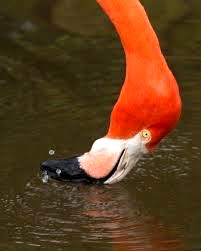
Flamingos use their curved beaks to eat food. They scoop up their food with their beaks and they shake their head from side to side. This forces the mud from their beaks, leaving the shrimp to be swallowed. This adaptation helps it survive because the flamingo's beak helps them grab food and food keeps them healthy.
All found on the web
Date Posted:
2 years ago

Thank you so much!

 360 Tutoring Program